
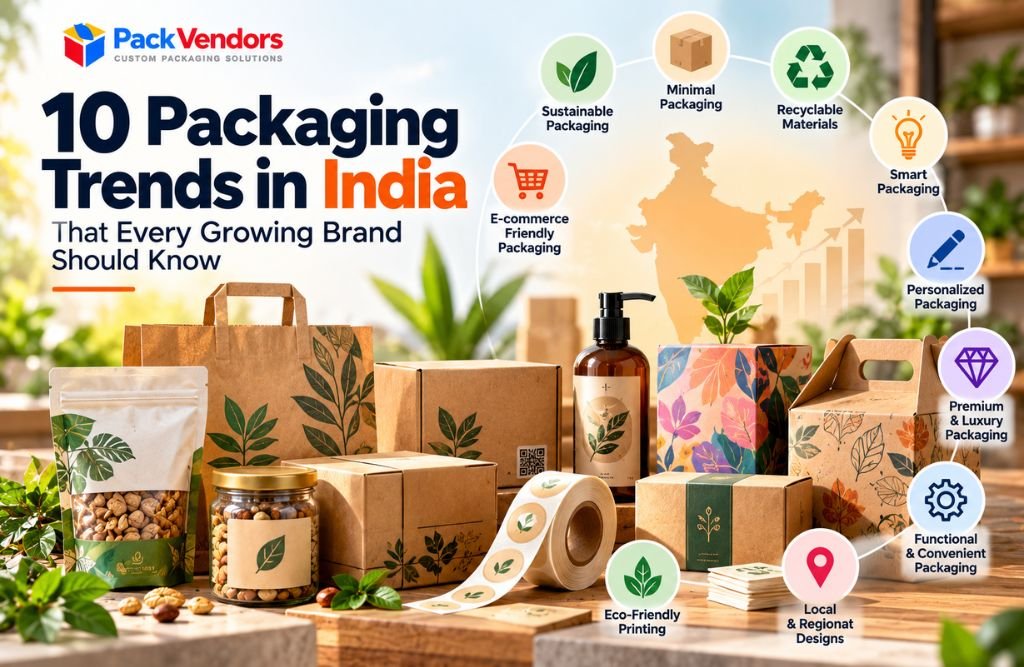
Packaging serves a dynamic function in terms of providing protection to the product, building up the brand identity, and ensuring safe transportation. The packaging decisions in India are being influenced by evolving consumer preferences, the expansion of e-commerce, increasing competition, and environmental sustainability issues. When it comes to developing brands, the packaging of the product has to take into consideration many things, including protecting the product, providing convenience to the customers, complying with regulations, producing at an optimal level, and managing costs. This is creating a variety of possibilities for companies through the use of new materials, designs, technology, and waste management.
1. Sustainable and Environmental Packaging
Sustainability is developing as a progressively important consideration in packaging, where companies are trying out recyclable paperboards, mono-material plastics, recycled materials, and even reusable packaging to cut down waste. The Indian EPR scheme also places responsibility for plastic packaging waste management on relevant producers, importers and brand owners.
Aspects that brands need to consider:
- Find out if there are any means of recycling the packaging materials locally.
- Remove any additional layers or unnecessary material.
- Ensure authenticity of recycled content and material.
- Determine the EPR compliance and applicable packaging laws.
2. Minimalist Package Design
The minimalist package design takes advantage of a clean layout, readable font, and effective use of colours that reflect the personality of the product. Plain packaging design is ideal for personal care items, foods, well-being products, and consumer goods that make an impact in the market.
Things to Study for Products:
- Focus on readability and hierarchy of visuals.
- Maintain all needed information about products and regulations.
- Conduct testing at real packaging size.
- Remove decorative elements which are not worth it.
3. Connected and Smart Packaging
Smart packaging involves the application of digital technology to give information about the product, traceability, and verification, as well as customer communication. The QR codes can also be used to obtain details regarding the product usage, its ingredients, demonstration, recycling and customer service, without changing the packaging of the product.
The questions for brands to think about:
- Associate codes with helpful information that is also mobile-friendly.
- Maintain accuracy of information digitally.
- Use proper authentication for high-risk products.
- Make sure important information is accessible on the package itself, when necessary.
4. Flexible Packaging and Convenience-oriented Packing Solutions
Flexible packaging like pouches, sachets, bags, wrappers, and films gives Indian brands the flexibility of choosing from different packaging solutions based on the size and cost of the products that they produce. Small packaging helps reduce the cost of production, whereas pouch and resealable packaging help increase convenience of household items and snacks.
Things to consider by brands:
- Linkage of pack size to purchase and usage behavior of consumers.
- Use of resealable packs in case they offer any benefit in terms of storing the product.
- Barrier needs for products that are moisture-sensitive or consumable in nature.
- Recyclable structures where there is a recycling facility.
5. Packaging for E-commerce That Defends
Since there is growth in e-commerce, the demand for protection of the products when transporting increases. Depending on the type of products, there is a necessity for sealing and protection; leaks should be sealed. Right-sized packaging helps ensure efficiency when it comes to using resources and space in packaging while maintaining product safety.
Brands need to remember:
- Testing the packaging under realistic conditions for handling and transporting the package.
- Sizing up the right box which will contain the product.
- Proper packing according to the brittleness of the product.
- Suitable, secure package design.
- Damage, leakage, returns and customer complaints after the launch.
6. Unique and Premium Packaging
Quality and improved packaging can enable firms to have a unique selling point for their products through personalizing labelling, seasonal packaging, regional languages, and limited-edition packaging. The ideal use of packaging is in gifts, cosmetics, sweets, specialty food, and directly to consumer business.
Issues that the brands need to take into account:
- Use unique designs for particular segments of customers or occasions.
- Check whether luxury packaging is justified for the pricing strategy adopted.
- Do a feasibility check on whether short-run digital printing is possible.
- Discard any unnecessary features that add cost.
7. Refillable and Reusable Packaging
As a consequence of employing refillable packaging, it will be possible for the brand to utilize less disposable packaging. Refillable and reusable packaging can create wonders for home cleaners, personal care products, and beverages. Even though the refillable packaging can reduce the use of materials in reality.
The brands that should consider:
- Understand the type of goods purchased by consumers regularly.
- Design the refill packs which would go in the original packaging.
- Develop guidelines on handling and hygiene.
- Predict the number of product cycles, product returns, and savings in material.
8. Digital Printing and Packaging Automation
Efficient and flexible operations can be achieved by companies using digital printing and packaging automation. The digital printing technologies, companies can produce smaller manufacturing batches and make quick alterations in the design and labelling of the products according to the regional and seasonal campaigns. Moreover, automation increases the efficiency of the packaging process, as packaging, sealing, labelling, and order checking are done during increased orders.
Brands should take into account:
- Comparison of digital and traditional printing at projected production levels.
- Analysis of minimum quantity orders and change-over times.
- Automation where labour or consistency necessitates automation.
- Evaluation of equipment compatibility with current packaging material.
- Review of maintenance, training, and ongoing costs of operation.
9. Package Design for Product Integrity
Product integrity is one of the important aspects that have to be taken into account when packaging pharmaceuticals, food and beverages, and cosmetics. With the use of such components as break seals, induction seals, tear strips, and security labels, it becomes possible to check if there is some alteration in the product. Protection from moisture and light, as well as leak-proof ends, ensure the integrity of the product.
Brand factors to be considered include:
- Using appropriate seals/closures for their products.
- Directing tests for packaging suitability and shelf life.
- Making sure that the important food safety/pharmaceutical and labelling rules are met.
- Checking that there are clear signs of tampering that customers can classify.
10. Right Sizing and Material-Efficient Packaging
Right-sizing involves using the correct pack size and appropriate material for packing to protect the product without causing unnecessary waste. The above-mentioned strategy, often supported by Custom Packaging, is particularly useful for e-commerce companies or brands that offer different products. Unnecessary packaging, such as oversized cartons, fillers, and extra layers, increases material consumption, storage space requirements, and transport volume.
Things that brands should consider include:
- Determining the quantity of packaging materials used per good.
- Analyzing the size of boxes that are used.
- Testing various designs to analyze their performance.
- Checking the performance of the package in storing and transportation of the products.
Selecting Proper Trends for Brand Packaging in India
New brands do not need to adopt all packaging trends available. Instead, they should select only those trends which are relevant to their requirements. Some of the factors that need to be considered before selecting any packaging trend include:
- Product Needs: Identify the need for protection, barriers, shelf-life, hygiene and handling for the product.
- Customer Needs: Know the customer’s preferences in terms of convenience, appearance, portability, information and disposal.
- Overall Costs: Relate material costs, printing, filling, warehousing, shipping, breakage and waste disposal costs.
Packaging Strategy for the Future
Through packaging innovations, emerging brands can improve the level of protection, customer satisfaction, and efficiency. Sustainable packaging can cost a lot and may not have recycling capabilities, while automation and personalized packaging will involve certain costs. In addition, companies must understand what recyclable, biodegradable, compostable, or reusable materials can be used for packaging to avoid making false statements about environmentally friendly packaging. In India, all brands should know their packaging regulations and responsibilities in terms of extended producer responsibility through official channels like the central pollution control board. Moreover, industry analysis from Pristine Market Insights may be helpful to gain knowledge about the packaging industry, latest market trends, and changes within businesses. Every brand needs to follow all trends but choose those that match the product, customers, budget, and distribution methods.