
As we move into 2026, the printing and packaging manufacturing industry stands at a pivotal moment. This sector — one that blends traditional production with advanced technology — is both cost-intensive and strategically critical for global supply chains. Whether you run a small print house or manage a large packaging plant, understanding how to budget effectively in this evolving landscape is essential for profitability and long-term growth.
In this article, we’ll explore the key budgetary components, cost drivers, market forecasts, and industry expectations that business owners and financial planners need to consider for 2026.
Global Market Outlook and Budget Implications
Before diving into industry costs, it’s important to grasp the macroeconomic forecast:
- The global packaging printing market is expected to grow from approximately $339.8 billion in 2025 to $365.2 billion by 2026. This signals sustained demand and expanding opportunities, which must be reflected in budgeting for capacity, materials, and labor costs.
- Packaging and labels remain among the most resilient segments in print, emphasizing the need for investment in modern print lines and finishing equipment to meet quality standards and volume expectations.
Budget takeaway: These growth projections suggest that businesses should plan to allocate more toward production optimization, inventory buffers, and new technology — especially for packaging applications.
Key Budget Components in 2026
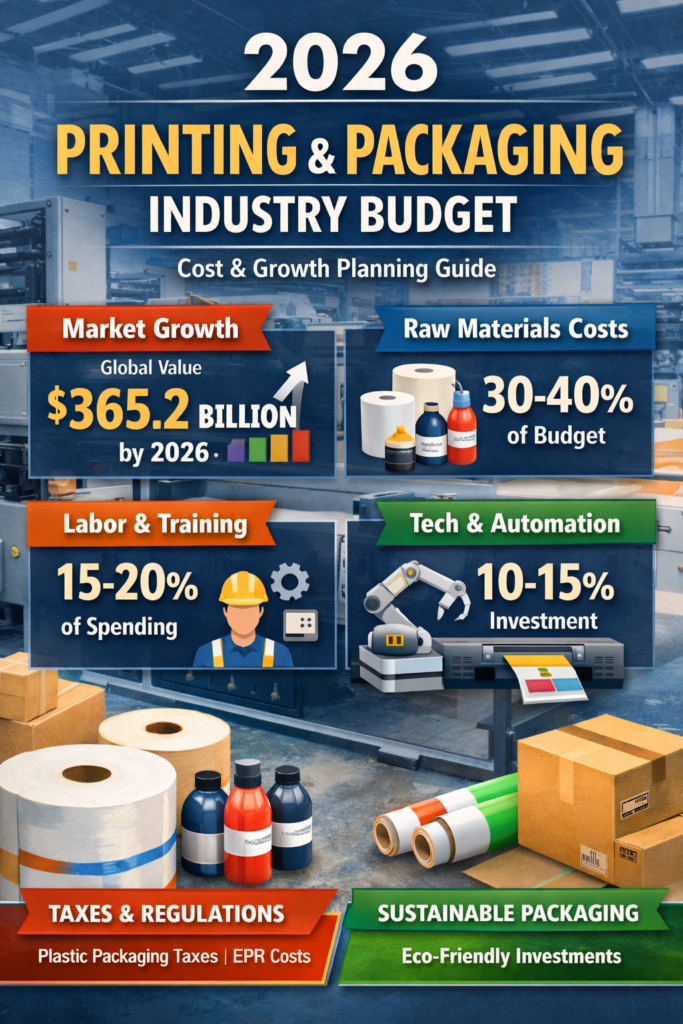
Crafting a reliable budget for your printing and packaging business involves assessing both direct production costs and overhead expenses:
🔹 Raw Materials & Supply Chain Costs
Materials such as paper, board, inks, and film are among the largest budget items.
- The pricing of packaging boards and papers can fluctuate due to trade policies, import restrictions, or minimum import pricing, which historically has driven up costs for boards significantly.
- In addition, the impact of inverted tax structures (e.g., higher GST on raw materials than finished goods) can slow cash flows and should be factored into working capital forecasts.
Budget recommendation: Set aside a portion of your budget — often 30–40% of total operating costs — to secure raw materials and manage price volatility.
🔹 Labour & Skill Investment
Labor costs are rising globally as wage standards increase and skilled technicians become harder to find.
- Budget planning for 2026 must incorporate training costs for digital printing, automation oversight, and new packaging technologies. As automation continues to redefine workflows, businesses are redirecting funds toward staff upskilling.
- Industry leaders are even calling for more budget allocations toward government–linked skill development programs to support manufacturing sectors.
Budget recommendation: Allocate sufficient funds (often 15–20%) to labor costs, including training, recruitment, and retention strategies.
🔹 Technology & Capital Investment
Automation, digital presses, AI-guided workflows, and finishing gear all contribute to competitiveness but require upfront investment.
- Transitioning to digital inkjet and wide-format systems, which reduce waste and improve turnaround times, can reduce long-term unit costs but demands capital budgeting.
- Emerging technologies — such as automated rightsizing systems for e-commerce packaging — may increase efficiency and reduce material waste.
Budget recommendation: Plan a capital investment fund focused on technology upgrades. A typical benchmark is 10–15% of revenue reinvested annually in equipment and software enhancements.
Regulatory and Tax Considerations
Government policy can significantly impact the budgeting process:
🔹 Taxes and Incentives
Tax rates — including changes to packaging taxes or GST structures — influence both cost and pricing strategy.
- In many markets, environmental taxes (like plastic packaging taxes) are escalating in line with inflation, pushing companies to factor sustainability compliance costs into budgets.
- Calls for tax relief, simplified compliance, and lower operating overheads are part of broader industry budget discussions.
Budget recommendation: Monitor tax reforms and set aside contingency funds (typically around 5% of total budget) to manage regulatory expenses and avoid cash flow stress.
🔹 Sustainability Compliance
Extended Producer Responsibility (EPR) and green mandates require investments in recyclable materials, certifications, and reporting systems. This can raise upfront costs but is increasingly unavoidable.
Budget recommendation: Consider allocating funds specifically to sustainability initiatives, such as eco-friendly materials and waste reduction technologies.
Workflow Optimization and Cost Efficiency
Cost control is equally important to budget allocation:
🔹 Automation & Efficiency
Automation has become a major budget lever, helping reduce manual labor costs, minimize errors, and speed up production.
- Many printing and packaging firms have automated significant portions of workflows, translating to real productivity gains.
Budget recommendation: Include a line item for efficiency tools and AI software, which can reduce variable costs over time.
🔹 Inventory & Logistics Management
Expenses tied to logistics, storage, and just-in-time materials management can eat into budgets if not carefully planned.
- Decentralized production models — such as distributed facilities — can reduce logistics costs significantly, lowering overall budget strain.
Budget recommendation: Optimize inventory budgets by analyzing lead times and supplier terms, aiming to balance supply assurance with cost minimization.
Strategic Budget Tips for 2026
Here are actionable practices to make your 2026 budget more resilient:
✔ Forecast material price trends quarterly
✔ Maintain a digital transformation reserve
✔ Prioritize sustainability in procurement
✔ Invest in cross-training your workforce
✔ Build a tax and compliance contingency plan
Conclusion
Budgeting for the printing and packaging manufacturing industry in 2026 is more complex than ever. With evolving market demand, shifting regulatory frameworks, and accelerating technology trends, successful companies will be those that plan proactively and allocate funds strategically.
From raw materials to automation investments, labor costs to regulatory compliance, each component plays a crucial role in shaping your bottom line. By grounding your financial plan in real industry trends and objective forecasts, you’ll be better prepared to navigate the challenges and opportunities that lie ahead.