
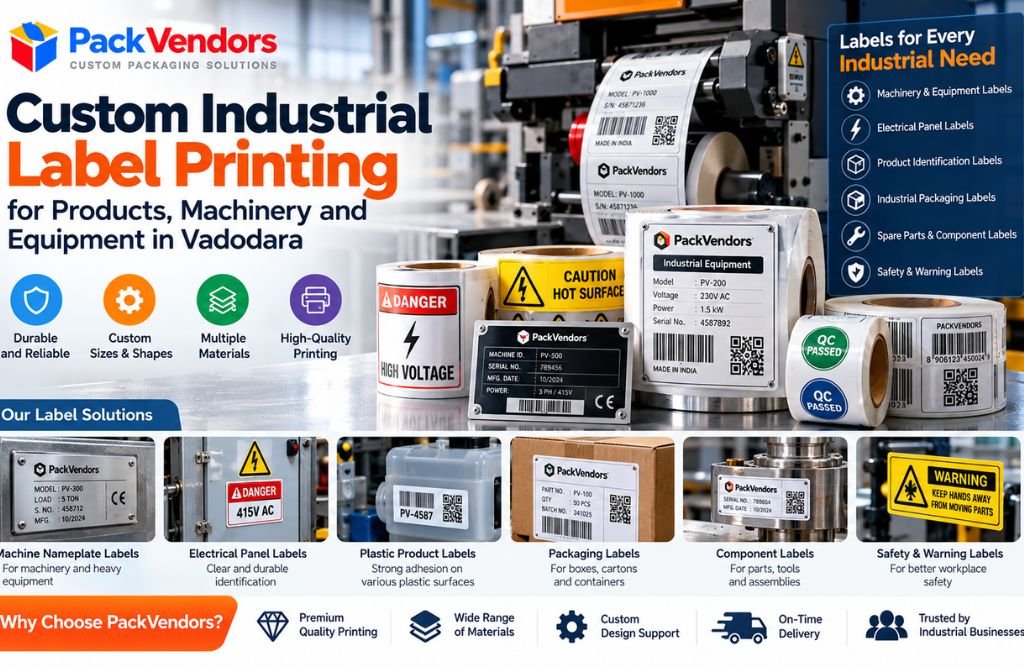
Industrial products need labels that do more than display a company name. They help manufacturers identify products, show technical details, organize inventory, and communicate important information to customers and technicians. Whether you manufacture plastic components, electrical panels, machine parts, or industrial equipment, a well-designed label makes your product easier to identify and gives it a professional appearance.
For manufacturers and suppliers in Vadodara, choosing the right label involves more than selecting a design. The material, adhesive, printing quality, label size, and operating environment all influence how well the label performs.
With professional Industrial Label Printing, businesses can create customized labels for different products, surfaces, and applications. The key is to choose a label that suits the product’s actual requirements rather than focusing on appearance alone.
Why Industrial Labels Are Important for Manufacturing Businesses
Imagine a warehouse containing hundreds of machine components or a factory where technicians regularly inspect electrical control panels. Without clear product identification, finding the correct part, checking specifications, or identifying a particular model can take extra time.
Industrial labels help businesses display essential information in a consistent and readable format. Depending on the application, they may support product identification, stock management, maintenance, traceability, and branding.
Common applications include:
-
Industrial machinery and manufacturing equipment
-
Electrical panels, control boxes, and electronic products
-
Plastic components, pipes, fittings, and containers
-
Tools, spare parts, and engineering products
-
Industrial packaging, cartons, and storage containers
-
Product identification, warning, and instruction labels
For example, a machine manufacturer may need separate labels for its company logo, model number, serial number, and operating instructions. A plastic component supplier may require smaller labels containing a product code or barcode.
The information and label specifications will vary, but the objective remains the same: make important product details easy to find and read.
Custom Industrial Labels for Different Products
Not every industrial product needs the same type of label. A label used on a cardboard box may perform differently from one applied directly to a metal machine housing.
1. Machinery and equipment labels
Machine manufacturers may use labels to display model numbers, manufacturer details, serial numbers, technical specifications, and operating instructions. The label size should accommodate the necessary information without making the text difficult to read.
For equipment exposed to dust, oil, heat, or frequent handling, material and adhesive selection deserve particular attention.
2. Electrical panel labels
Electrical panels and control systems may require identification labels, circuit information, warning symbols, and operating instructions. Clear text and appropriate symbols help technicians identify components and understand the information displayed.
Any mandatory safety information should be checked against the applicable requirements before printing.
3. Plastic product labels
Manufacturers of plastic components, containers, fittings, and other products may need labels for identification and branding. However, some plastic surfaces are more difficult to bond to than others.
Before ordering, confirm the plastic type and test the proposed adhesive on the actual product surface.
4. Industrial packaging labels
Boxes, containers, and packaged components may need product names, batch numbers, barcodes, handling instructions, or manufacturer information. The label should suit the packaging material and remain readable during storage and transportation.
A consistent layout across product variations can also make different sizes, models, and product categories easier to distinguish.
How to Choose the Right Material for Industrial Labels
Material selection should start with the environment in which the label will be used.
Paper labels can be suitable for many indoor identification and packaging applications. Synthetic materials, including polypropylene and polyester, may be more appropriate for selected applications requiring additional moisture resistance or durability. However, the actual performance depends on the specific material, adhesive, printing system, and finish.
Consider these factors before placing an order:
-
Surface type: Is the label going onto metal, painted metal, glass, smooth plastic, or a textured surface?
-
Environmental conditions: Will it face moisture, sunlight, heat, oil, cleaning chemicals, or abrasion?
-
Expected lifespan: Is it needed temporarily for packaging or permanently for equipment identification?
-
Readability: Will the label contain small technical text, barcodes, or serial numbers?
-
Application method: Will someone apply each label by hand, or will a labeling machine be used?
For example, a label for a machine kept inside a dry workshop may have different requirements from one used on equipment installed outdoors.
When the operating conditions are demanding, ask for material specifications and test a sample before approving a bulk order. No single material or adhesive is suitable for every industrial application.
Choosing the Right Adhesive for Machinery and Equipment Labels
A label can have excellent printing quality and still fail if it does not stick properly to the surface.
Adhesive selection is especially important for industrial products because surfaces may be painted, coated, textured, dusty, oily, or made from plastics that are difficult to bond to.
Before printing, check whether the surface is clean and compatible with the proposed adhesive. Also consider the temperature during application and the conditions the label will face afterward.
For instance, a label applied to a smooth metal panel may require a different adhesive from one applied to a textured plastic component. Labels intended for removal or replacement may also need different adhesive properties from permanent identification labels.
Testing the label on the actual surface is a practical way to identify adhesion problems before ordering larger quantities.
What Information Should an Industrial Product Label Include?
A good industrial label presents essential information clearly without overcrowding the available space.
Depending on the product, the label may include:
-
Company or brand name
-
Product name and model number
-
Serial number or batch identification
-
Technical specifications
-
Barcode or QR code
-
Manufacturer information
-
Relevant operating instructions or warnings
Not every label needs all these details. A small component may only require a product code, while a large machine may need several identification and instruction labels.
If you use barcodes or QR codes, ensure there is sufficient contrast and space for reliable scanning. Test the code at its final printed size rather than relying only on how it looks on a computer screen.
For variable information such as serial numbers or production batches, confirm that the printing process can accommodate the required data.
Industrial Label Printing: Roll Labels or Sheet Labels?
The best format depends on how your business applies labels and how many products you process.
Roll labels can be useful for businesses applying large quantities of labels or using compatible labeling machines. Before printing, confirm the roll direction, core size, label spacing, and winding requirements with the machine specifications.
Sheet labels may suit smaller quantities and manual application, depending on the label material and production method. They can be convenient when individual labels are applied by hand.
For example, a manufacturer labeling a few prototypes may have different requirements from a business labeling thousands of identical containers every month.
Discuss the application method with your printing supplier before production. A correctly printed label in an unsuitable format can create unnecessary work during application.
What Affects Industrial Label Printing Costs?
The cost of custom labels depends on several factors. Understanding these details helps businesses request more accurate quotations and compare options fairly.
The main cost factors include:
-
Label dimensions: Larger labels generally use more material.
-
Order quantity: Quantity can affect setup costs and the price per label.
-
Material and adhesive: Specialized materials or adhesives may cost more than standard options.
-
Shape and finishing: Custom shapes, protective finishes, or special effects can influence pricing.
-
Printing requirements: Multiple colors, fine details, and variable data may affect production.
-
Roll or sheet format: The required delivery format can influence production and finishing.
-
Artwork preparation: New designs or artwork adjustments may add to the overall cost.
For a useful quotation, provide the required dimensions, quantity, artwork, application surface, and intended environment. If you have a sample of your current label, sharing its specifications can also help clarify your requirements.
Minimum order quantities and turnaround times vary by supplier and specification, so confirm these details before placing your order.
Common Industrial Label Printing Mistakes to Avoid
A few avoidable mistakes can lead to wasted labels, additional costs, and difficulties during application.
Choosing a label based only on price: A cheaper option may not be economical if it peels off or becomes unreadable in the intended environment.
Making technical text too small: Check the finished label at its actual size. Product codes and instructions must remain legible.
Ignoring surface compatibility: Different plastics, coatings, and textures can affect adhesion. Confirm compatibility before bulk production.
Overcrowding the design: Include the information users need, but organize it with clear spacing and a sensible reading order.
Skipping proof approval: Review spelling, dimensions, colors, technical details, and barcode readability before authorizing production.
Forgetting machine requirements: If labels are applied automatically, confirm the roll specifications and label spacing before printing.
A simple pre-production review can help prevent problems that are difficult or expensive to correct after the labels have been printed.
How to Order Custom Industrial Labels in Vadodara
If your business needs industrial labels, prepare the essential details before contacting a printing supplier.
-
Identify the application. Explain whether the label is for machinery, electrical panels, plastic components, spare parts, or packaging.
-
Confirm the dimensions. Provide the label width, height, shape, and available surface area.
-
Describe the environment. Mention any exposure to moisture, heat, chemicals, sunlight, oil, or abrasion.
-
Prepare the artwork. Include the logo, product details, technical text, and any barcode or QR code.
-
Specify the quantity and format. State the number of labels required and whether you prefer rolls or sheets.
-
Review the quotation and proof. Confirm the material, adhesive, finish, dimensions, and production details before approving the order.
Businesses looking for Industrial Label Printing in Vadodara should compare suppliers based on their ability to understand the application, recommend suitable specifications, and produce labels that meet the stated requirements.
For PackVendors, the most useful starting point is to understand the product being labeled and the conditions it will face. This makes it easier to discuss suitable materials, customization options, and printing requirements.
Frequently Asked Questions
Which labels are suitable for industrial machinery?
The suitable label depends on the machine surface, operating environment, required information, and expected lifespan. Material and adhesive compatibility should be confirmed before production.
Can industrial labels be customized in different sizes and shapes?
Custom sizes and shapes may be available depending on the printing method and material. Provide the required dimensions and application details when requesting a quotation.
Can barcodes and serial numbers be printed on industrial labels?
Yes, these can be included when supported by the selected printing process. The artwork should provide adequate space, contrast, and legibility, and the finished codes should be tested.
What information is required to get an industrial label quotation?
Prepare the label dimensions, quantity, artwork, application surface, operating conditions, preferred material, and roll or sheet requirements. These details help the supplier understand the job.
How can I reduce mistakes before bulk printing?
Check the artwork, spelling, label dimensions, adhesive compatibility, and application format. Where practical, approve a sample before proceeding with a larger production run.
Conclusion
Industrial labels help manufacturers identify products, communicate specifications, organize components, and maintain consistent product presentation. Their performance depends on more than the printed design: material, adhesive, surface compatibility, and working conditions all matter.
For businesses in Vadodara, the best approach is to define the application first and then select the label specifications accordingly. Whether you need labels for machinery, electrical panels, plastic products, or industrial packaging, careful preparation can help avoid common printing and application problems.
Need custom industrial product labels? Contact PackVendors with your product details, required quantity, dimensions, and application conditions to discuss a suitable labeling solution.