
When a rigid plastic tray, blister pack, clamshell, or custom insert fails in the field — cracking under light pressure, clouding after a trip through a sealing line, or warping on a warehouse shelf — the root cause is rarely the printing or the tooling. It’s almost always the sheet material it started as. Before a single cavity is cut or a logo is printed, the performance of a rigid package is already decided by the resin, the grade, and the gauge of the plastic sheet fed into the thermoformer. For buyers sourcing rigid packaging, polypropylene (PP) sheet has become the default workhorse material, and understanding why — and how it compares to its closest alternative, HDPE sheet — is the first step to specifying packaging that performs.
Why Rigid Plastic Packaging Starts with the Sheet Material
Every thermoformed package follows the same basic path: a flat plastic sheet is heated, drawn or vacuum-formed into a mold, trimmed, and then printed, sealed, or assembled into the finished pack. Each step inherits whatever properties the original sheet had. If the sheet lacks the right stiffness, the formed tray will flex and distort under load. If it lacks the right heat resistance, it will deform during sealing or sterilization. If it isn’t food-grade, it simply can’t go near a food product, no matter how good the mold design is.
In rigid packaging, two polyolefins do most of the heavy lifting: polypropylene (PP) and high-density polyethylene (HDPE). PP tends to be the material of choice where clarity, rigidity, and heat resistance matter — think blister packs, clamshells, and thermoformed trays that need to hold their shape and withstand hot-fill or sterilization steps. HDPE, by contrast, is favored where toughness, chemical resistance, and a bit more flexibility are the priority — heavier-duty trays, liners, and containers that need to resist impact and moisture over PP’s sharper, more rigid profile. Neither material is “better” in the abstract; the right choice depends on what the package has to survive between the forming line and the end user’s hands.
PP Sheet Properties That Matter for Thermoforming
For packaging buyers evaluating polypropylene sheet, a handful of properties drive the decision:
Food-grade purity. Virgin, food-contact-grade PP sheet is a baseline requirement for trays, blister inserts, and clamshells that touch food directly. Unlike resins that need additives or coatings to achieve food safety, PP sheet extruded from virgin polypropylene resin is inherently suited to direct food contact, which simplifies compliance for packaging converters.
Heat resistance. PP has a notably higher heat deflection temperature than many commodity plastics, which matters anywhere a package goes through a heat-sealing step, a hot-fill process, or sits near a heat lamp on a retail shelf. A tray that softens or warps mid-process is a line-stoppage problem, not just a cosmetic one.
Rigidity and formability. PP strikes a useful balance: rigid enough to hold a crisp, well-defined cavity shape after thermoforming, yet formable enough to draw into the deep-draw geometries that blister packs and clamshells typically require.
Chemical and moisture resistance. PP resists a broad range of oils, solvents, and moisture, which protects both the package and its contents during storage and transit — a particularly relevant property for food and consumer goods packaging that may sit in a warehouse for months.
Recyclability and cost. PP is widely recyclable and sits at a favorable cost point relative to its performance, which is why it remains the default olefin for high-volume rigid packaging runs where margins matter.
Taken together, these properties explain why PP sheet, rather than more exotic engineering plastics, is the material converters reach for first when specifying rigid packaging substrates.
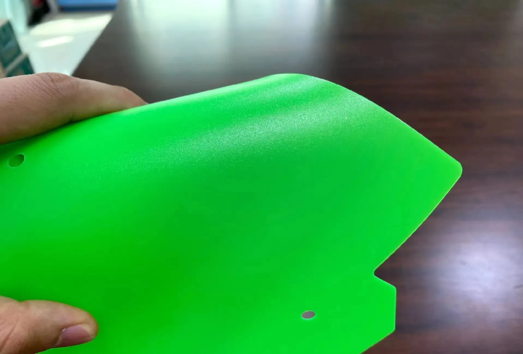
PP-H Homopolymer vs Copolymer: Which Grades for Packaging
Not all PP sheet is the same, and the homopolymer-versus-copolymer decision is where a lot of packaging specifications go wrong.
PP-H (homopolymer) sheet is produced from pure propylene monomer, which gives it the highest rigidity and the highest heat deflection temperature in the PP family. For PP-H homopolymer sheet, that extra stiffness and thermal stability translate directly into trays and blister bases that hold a crisp cavity shape, resist sagging under a filled product’s weight, and tolerate higher sealing or sterilization temperatures without softening. This makes PP-H the natural choice for rigid trays, structural inserts, and any application where dimensional stability under heat is non-negotiable.
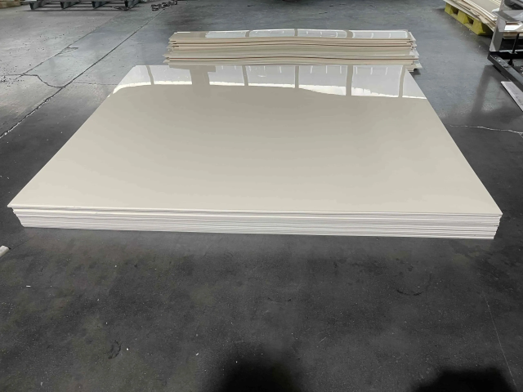
Copolymer PP sheet, which incorporates a small percentage of ethylene into the polymer chain, trades a bit of that rigidity for significantly better impact resistance and low-temperature toughness. It’s the better fit for blister packaging or clamshells that need to survive drops, flexing, or cold-chain conditions without cracking at the fold lines or corners.
As a rule of thumb: if the packaging’s job is to stay rigid and hold shape under heat, specify PP-H. If the packaging’s job is to flex, snap-fit, or survive impact and cold handling, lean toward copolymer PP. Many packaging lines use both — PP-H for the structural tray base, copolymer PP for a hinged or snap-close lid.
Thickness, Panel Size and Cut-to-Size for Your Packaging Line
Sheet gauge and panel dimensions are where packaging specifications meet practical sourcing. For thermoforming applications, PP sheet is typically supplied in a thickness range of roughly 3–50 mm, with thinner gauges (toward the 3–10 mm end) suited to lighter trays, blister bases, and clamshells, and thicker gauges reserved for structural inserts, dunnage, or reusable rigid containers that need to resist repeated handling.
Standard panel sizes commonly run up to around 2000 × 4000 mm, which gives converters flexibility to nest multiple cavities per sheet and minimize trim waste on the thermoforming line. For buyers with non-standard tooling or smaller production runs, cut-to-size sheet — ordered at the exact thickness and panel dimensions a specific mold or forming station requires — avoids the waste and handling cost of cutting down oversized stock in-house.
When specifying sheet for a new packaging line, it’s worth confirming thickness tolerance, panel flatness, and minimum order quantities for custom cut sizes up front — these details affect both tooling fit and total landed cost far more than the headline resin choice does.
From Sheet to Finished Pack: Thermoforming and Finishing Notes
Once the right PP sheet is on hand, the path to a finished pack runs through thermoforming (vacuum or pressure forming into the mold), die-cutting or trimming to separate individual cavities from the forming web, and finally surface preparation for printing or labeling. PP’s naturally low surface energy means it doesn’t accept ink as readily as some other plastics, so packaging converters typically run a corona or flame treatment step on the sheet surface before printing to improve ink adhesion — a detail worth confirming with your printing partner before the first production run, so branding and lot-coding come out crisp rather than smudged or prone to scuffing in transit.
FAQ
Is PP sheet food-contact safe for packaging? Yes. Virgin, food-grade PP sheet is widely used for trays, blister bases, and inserts that directly contact food, since it’s inherently suited to food contact without requiring additional coatings.
What thickness of PP sheet should I use for a thermoformed tray? It depends on the tray’s size and load, but most thermoformed trays and blister bases fall in the thinner end of the typical 3–50 mm PP sheet range, with heavier structural inserts using thicker gauges.
PP-H vs copolymer PP — which is better for blisters? PP-H offers more rigidity and higher heat resistance, making it ideal for structural tray bases. Copolymer PP offers better impact resistance and flexibility, which often makes it the better choice for blister lids or hinged clamshell sections.
Can PP sheet be printed or die-cut after forming? Yes. PP sheet is routinely die-cut to final shape after thermoforming, and can be printed after a corona or flame surface treatment step to improve ink adhesion.
PP vs HDPE sheet — how do I choose for rigid packaging? Choose PP when rigidity, heat resistance, and clarity after forming matter most, such as trays and blister packs. Choose HDPE when toughness, chemical resistance, and impact durability are the priority, such as heavier-duty containers and liners.
Rigid packaging quality is decided before the mold ever closes — it starts with the sheet. PP sheet remains the workhorse material for thermoformed trays, blisters, and custom inserts because it delivers the right combination of food-grade purity, heat resistance, and formability at a cost point high-volume packaging runs can sustain. The practical path to the right specification is straightforward: confirm food-grade compliance, choose between PP-H and copolymer PP based on whether rigidity or impact resistance matters more, then dial in thickness and panel size to fit your tooling.