
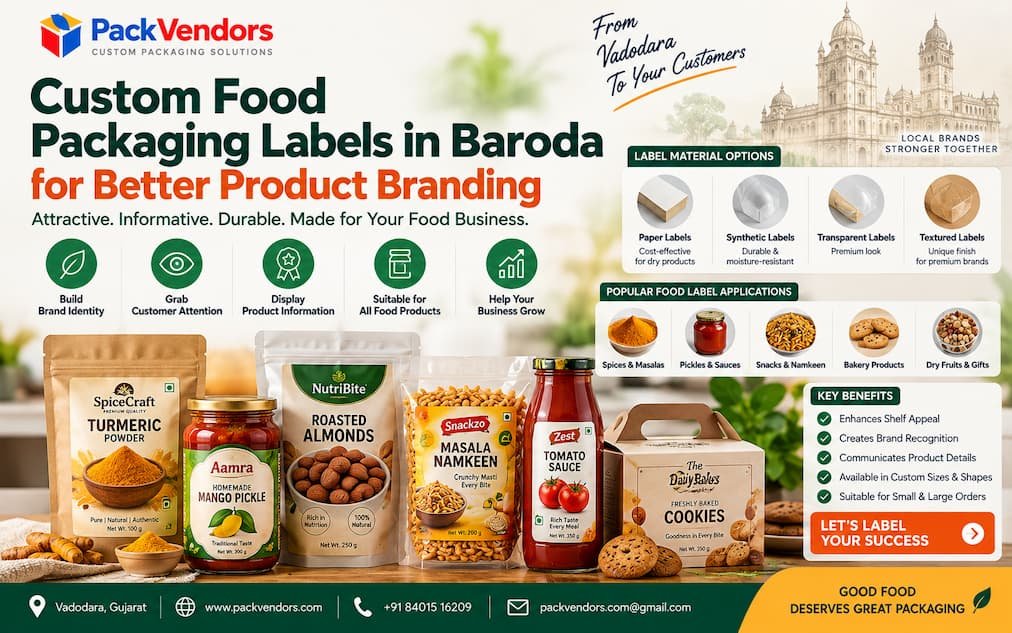
A good food product deserves packaging that catches attention. Whether you sell homemade pickles, spices, namkeen, sauces, dry fruits, or bakery products, your packaging is often the first thing customers notice. Before tasting your product, they see your bottle, pouch, box, or jar and the label attached to it.
A well-designed food label does more than display your brand name. It helps customers understand the product, find important information, and remember your business. However, creating an effective label requires more than choosing attractive colors and adding a logo. Material, size, adhesive, printing quality, and product information all matter.
For food manufacturers, home-based businesses, and growing brands, choosing professional Food Packaging Labels in Vadodara can be an important step toward improving product presentation and building a consistent brand identity.
In this article, we will discuss how to choose custom food packaging labels, what to consider before printing, and how the right design can support your food business.
Why Custom Food Packaging Labels Matter
Imagine two similar food products placed next to each other in a shop. One has a clear, attractive label with readable information, while the other has faded printing and an unorganized design. Even if both products have similar quality, their packaging may create different first impressions.
This is why food labels deserve careful attention.
A professionally designed label can help you:
-
Make your brand easier to recognize
-
Present product information clearly
-
Create a consistent appearance across products
-
Highlight flavors, ingredients, or product variants
-
Improve the overall look of your packaging
-
Make your product more suitable for retail display
For example, a homemade pickle brand may use traditional colors and food illustrations, while a premium dry fruit brand may prefer a simple design with elegant typography. The right approach depends on your product, audience, and brand personality.
The purpose is not to make the packaging unnecessarily complicated. It is to create a label that looks attractive and communicates useful information.
Custom Labels for Different Food Products
Different food products have different packaging needs. A label designed for a dry spice pouch may not work equally well on a pickle jar or sauce bottle.
Spice and Masala Labels
Spice packaging needs a clear product name, readable information, and an attractive design. If you sell turmeric, Chilli powder, coriander powder, or blended masalas, consistent branding can help customers recognize your products easily.
You can maintain the same logo and layout while using different colors or graphics for each spice variety.
Pickle and Sauce Bottle Labels
Pickles, sauces, and chutneys are often packed in bottles or jars. These containers may be exposed to oil, moisture, and frequent handling.
Before selecting the label, consider the bottle’s surface and storage conditions. The material and adhesive should be chosen according to the actual environment in which the product will be used.
Snacks and Namkeen Packaging
Snack and namkeen packaging often depends on attractive visual presentation. A clear product name, flavour information, and appealing graphics can help customers understand the product quickly.
The label should remain readable even when printed on a small pouch or container.
Bakery and Homemade Food Labels
Small bakeries and home-based food businesses can use custom stickers on boxes, jars, bags, and other packaging. A consistent label design can make different products from the same business look connected.
Dry Fruit and Gift Packaging
Dry fruit boxes and festive food packaging may benefit from premium-looking designs. Matte finishes, elegant fonts, and carefully selected colours can create a refined appearance without overcrowding the package.
How to Choose the Right Food Label Material
The label material should match your product and packaging conditions. There is no single material that works best for every food business.
Paper Labels
Paper labels can be suitable for certain dry products and packaging environments where exposure to water or moisture is limited. They may offer a clean appearance and an economical option for some applications.
However, paper labels should be evaluated carefully if the packaging will be exposed to humidity, refrigeration, oil, or liquid.
Synthetic Labels
Synthetic materials may be suitable when labels need greater resistance to moisture and regular handling. They can be considered for bottles, jars, and other packaging where durability is important.
The final choice depends on the packaging surface, storage conditions, design requirements, and budget.
Moisture-Resistant Labels
Products such as sauces, pickles, and refrigerated food items may need labels that can handle moisture. Remember that material alone does not determine label performance. Adhesive quality and printing methods also play a role.
When ordering Food Packaging Labels in Vadodara , explain how your product will be stored, transported, and handled. This will help the printing provider suggest an appropriate solution.
Food Packaging Label Design Tips
A food label should look attractive while keeping important information easy to read. Too many graphics, colours, or fonts can make the packaging confusing.
Keep Your Brand Name Visible
Your logo and brand name should be easy to find. If you sell multiple products, using a consistent logo and visual style can help customers recognize your business.
Make the Product Name Clear
Customers should quickly understand what the product is. Avoid placing the product name in a crowded area or using a font that is difficult to read.
Use Colours Strategically
Colours can help distinguish different flavours and product categories. For example, you may use separate colour combinations for mango pickle, lime pickle, and mixed pickle while keeping the overall branding consistent.
Choose colours that match your brand and work well when printed.
Avoid Overloading the Label
Include the necessary information, but avoid filling every available space. A clean layout often makes the packaging easier to understand.
Check the Design at Actual Size
A design that looks excellent on a computer screen may become difficult to read when printed on a small bottle or pouch. Always review the artwork at its final size before approval.
What Information Should Food Labels Include?
Food businesses must review the information required for their particular products and applicable regulations before printing. Requirements can vary depending on the product and market.
Depending on the product, a label may include:
-
Brand name
-
Product name
-
Ingredient information
-
Net quantity
-
Nutritional information, where applicable
-
Allergen information, where applicable
-
Storage instructions
-
Batch or lot details
-
Manufacturing or packing details
-
Best-before or expiry information, where applicable
-
Manufacturer or marketer information
-
Applicable licence or regulatory details
Check every word, number, date, and measurement carefully before approving the artwork. A printing error can become costly when a large quantity of labels has already been produced.
Your printer can assist with label layout and production specifications, but your business should verify the information and compliance requirements applicable to the product.
Choosing the Right Label Size and Shape
The size of the label should be based on the actual packaging, not just a standard measurement.
A label that is too large may wrinkle on a curved bottle. A label that is too small may leave insufficient space for important information.
Before finalizing the design, consider:
-
Packaging width and height
-
Flat or curved surface
-
Label placement
-
Front, back, or wraparound design
-
Label corners and shape
-
Available printing area
-
Manual or automatic application
Rectangular, square, round, oval, and custom-shaped labels may be possible depending on the packaging and printing process.
If you are unsure about the dimensions, test a paper mock-up on the actual container before finalizing the artwork.
Matte or Glossy Food Packaging Labels?
The finish can influence the appearance and feel of your packaging.
Glossy labels can make colours look bright and vibrant. They may suit colourful snack packaging, sauces, and products that use food photography.
Matte labels offer a softer, less reflective appearance. They may be suitable for premium, minimal, or traditional food brands.
The finish should be selected based on the design, packaging conditions, handling, and budget. A visually attractive finish is useful only when it also works well for the product.
Roll Labels or Sheet Labels?
The label format depends partly on how you plan to apply the labels.
Sheet or individually supplied labels may be convenient for some manual applications. Roll labels may be more suitable for businesses using automatic labeling machines.
If you use machinery, confirm details such as:
-
Roll direction
-
Label spacing
-
Core size
-
Roll diameter
-
Label orientation
-
Machine compatibility
Discuss these specifications with the printer before production. A label that looks correct but is supplied in the wrong format may create problems during application.
What Affects Food Label Printing Cost?
Several factors influence the cost of custom food packaging labels.
Quantity
The cost and production process may differ between small and bulk orders.
Label Dimensions
Larger labels generally require more material.
Material
Different paper and synthetic materials have different costs and performance characteristics.
Shape and Cutting
Custom shapes may involve additional cutting or production requirements.
Printing and Finishing
Colour printing, special finishes, and protective treatments can affect the quotation.
Application Format
Roll labels intended for automatic machines may have additional specifications compared with labels for manual application.
When comparing quotations, consider material quality, printing accuracy, consistency, and suitability—not just the price per sticker.
How to Order Custom Food Packaging Labels
Preparing your requirements in advance can make the printing process smoother.
1. Share Packaging Details
Provide the bottle, pouch, box, or jar dimensions. A physical sample or clear photograph can be helpful.
2. Confirm Label Specifications
Discuss the label size, shape, material, adhesive, quantity, and finish.
3. Prepare the Artwork
Provide your logo, product name, colours, images, and product information. Make sure all text has been checked.
4. Review the Proof
Check the spelling, alignment, colours, measurements, and placement of important information.
5. Approve a Sample
For new packaging, a physical sample can help you check how the label looks and fits on the actual container.
6. Confirm Production Details
Finalize the quantity, application format, and expected production timeline with your printing provider.
Businesses looking for Food Packaging Labels in Vadodara should provide complete specifications before requesting a quotation. This helps reduce confusion and avoids unnecessary artwork changes.
Common Mistakes to Avoid When Printing Food Labels
Some packaging problems can be avoided with proper planning.
-
Designing the label without measuring the container
-
Using fonts that are too small
-
Selecting material without considering moisture
-
Ignoring adhesive requirements
-
Forgetting to check product information
-
Approving artwork without reviewing a proof
-
Not confirming roll specifications for machine application
-
Printing a large quantity without testing the label
Taking time to review these details can save money and reduce production problems.
Frequently Asked Questions
Can I order custom labels for a small food business?
Yes, printing options may be available for businesses with different order quantities. Minimum order quantities and pricing depend on the printing method, material, and supplier.
Which labels are suitable for pickle bottles?
The choice depends on the bottle surface, exposure to oil or moisture, storage conditions, and adhesive requirements. Discuss these factors with your printer before selecting the material.
Can I provide my own label design?
In most cases, you can provide your own artwork. Confirm the preferred file format, dimensions, and print specifications with the printing provider.
Can food labels be printed in custom shapes?
Custom-shaped labels may be possible depending on the material, cutting method, and packaging requirements.
Should I request a physical label sample?
A physical sample can help you check the label’s size, appearance, readability, and fit before ordering a larger quantity.
Final Thoughts
Custom food packaging labels are an important part of product presentation. They help communicate your brand, display product information, and create a consistent appearance across your packaging.
Whether you sell spices, pickles, sauces, snacks, bakery products, or dry fruits, your label should be designed around the product’s actual requirements. Material, adhesive, size, printing quality, and finishing all deserve attention.
If you need Food Packaging Labels in Vadodara , begin by checking your packaging dimensions and understanding the conditions in which your product will be stored and handled. Then choose a design that is attractive, readable, and aligned with your brand.
With careful planning and reliable printing, custom labels can help your food products look more consistent and ready for the market.