
The global packaging industry plays a crucial role in modern trade, protecting products, extending shelf life, and supporting logistics across food, pharmaceuticals, e-commerce, and consumer goods. However, geopolitical tensions—especially a potential conflict involving Israel, United States, and Iran—could significantly disrupt this industry.
A large-scale war in the Middle East would not only affect energy markets but also ripple across manufacturing, shipping, and raw material supplies. The global impact packaging industry could face major shifts in production costs, supply chain stability, and sustainability efforts.
This article explores how such a conflict could influence packaging materials, logistics, and long-term industry strategies worldwide.
Global Impact Packaging Industry: Key Effects of an Israel–US vs Iran War
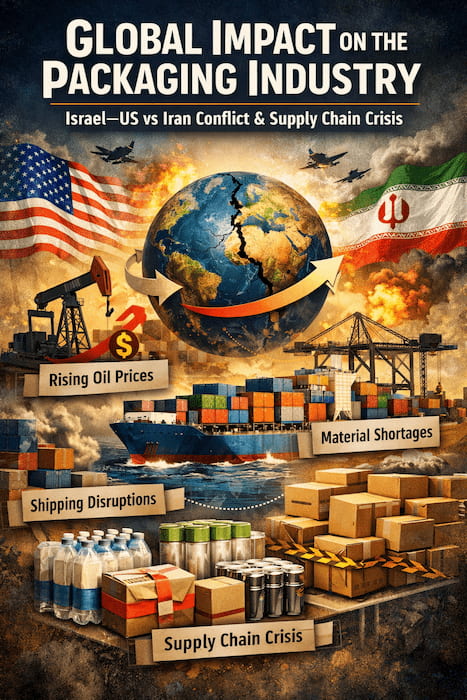
1. Rising Oil Prices and Plastic Packaging Costs
Most packaging materials—especially plastics—are derived from petrochemicals. A war involving Iran could disrupt oil exports from the Middle East, pushing global crude prices significantly higher.
Higher oil prices would affect:
-
Plastic packaging production
-
Flexible packaging films
-
Polyethylene and polypropylene materials
-
Packaging resins and adhesives
Since plastics dominate sectors like food packaging, pharmaceuticals, and consumer goods, manufacturers could face major cost increases.
Impact on the Packaging Industry
-
Increased production costs
-
Higher prices for packaged goods
-
Reduced profit margins for manufacturers
Companies may be forced to rethink material choices or shift toward alternative packaging solutions.
2. Supply Chain Disruptions Through Strategic Shipping Routes
The Middle East controls some of the world’s most important shipping lanes, including the Strait of Hormuz and the Red Sea.
If conflict escalates, shipping disruptions could affect the transport of:
-
Raw packaging materials
-
Machinery for packaging plants
-
Finished packaged products
For example, container shipping between Asia and Europe often passes through these regions. Delays or blockages could slow down global manufacturing.
Consequences
-
Longer delivery times
-
Increased freight and insurance costs
-
Supply shortages for packaging converters
The global impact packaging industry would be felt particularly in regions dependent on imported materials.
3. Aluminum and Metal Packaging Price Volatility
Metal packaging—used in beverage cans, food tins, and aerosol containers—relies on materials such as aluminum and steel.
Geopolitical instability often causes commodity markets to react quickly. A major conflict involving Israel and Iran could trigger price spikes due to:
-
Supply disruptions
-
Increased industrial demand
-
Trade restrictions
Industries that rely on metal packaging—like beverages, canned food, and cosmetics—may face cost pressures.
4. Increased Demand for Defense and Medical Packaging
During wartime, demand for specialized packaging rises rapidly.
Military logistics require packaging for:
-
Medical supplies
-
Rations and food kits
-
Protective transport packaging
-
Chemical and hazardous material containment
The United States Department of Defense and allied forces would likely increase procurement of durable packaging materials.
This shift could temporarily redirect resources away from consumer packaging sectors.
5. Acceleration of Sustainable Packaging Alternatives
One unexpected outcome of geopolitical instability could be the faster adoption of sustainable materials.
If oil prices surge, companies may accelerate investment in:
-
Paper-based packaging
-
Biodegradable plastics
-
Compostable materials
-
Recycled packaging
Regions like European Union and India are already pushing stricter sustainability regulations, which could align with the industry’s need to reduce dependence on petrochemicals.
6. E-Commerce Packaging Pressure
Global uncertainty often leads to shifts in consumer behavior. Conflicts can cause:
-
Stockpiling of essential goods
-
Increased online shopping
-
Disruptions in retail supply chains
Companies such as Amazon and Alibaba Group rely heavily on efficient packaging systems.
A war-driven supply chain crisis could increase demand for:
-
Corrugated boxes
-
Protective packaging
-
Last-mile delivery packaging
This would place additional pressure on paper and pulp supply.
Regional Effects on the Global Packaging Industry
Middle East
Manufacturing hubs may face shutdowns, export restrictions, and energy shortages.
Europe
Heavy dependence on imported energy could increase packaging production costs.
Asia
Major packaging producers like China and India might see increased global demand but also higher raw material costs.
North America
Domestic manufacturing may expand as companies attempt to reduce supply chain dependence on unstable regions.
Long-Term Structural Changes in the Packaging Industry
If geopolitical tensions persist, the global impact packaging industry could see several structural transformations:
1. Regionalized Supply Chains
Companies may move packaging production closer to consumer markets.
2. Greater Raw Material Diversification
Manufacturers will seek alternatives to petroleum-based materials.
3. Automation and Smart Manufacturing
Advanced packaging technologies could help reduce reliance on volatile supply chains.
4. Strategic Stockpiling
Large corporations may maintain reserves of critical packaging materials.
Conclusion
A conflict involving Israel, United States, and Iran would extend far beyond military or political consequences. The global impact packaging industry would be deeply affected through higher oil prices, disrupted shipping routes, and volatile raw material markets.
However, such challenges could also accelerate innovation—pushing the industry toward sustainability, supply chain resilience, and new material technologies.
For packaging manufacturers, suppliers, and global brands, the ability to adapt quickly to geopolitical shocks will determine long-term competitiveness in an increasingly uncertain world.